
Blog
Black Pomfret vs White Pomfret : Complete Guide

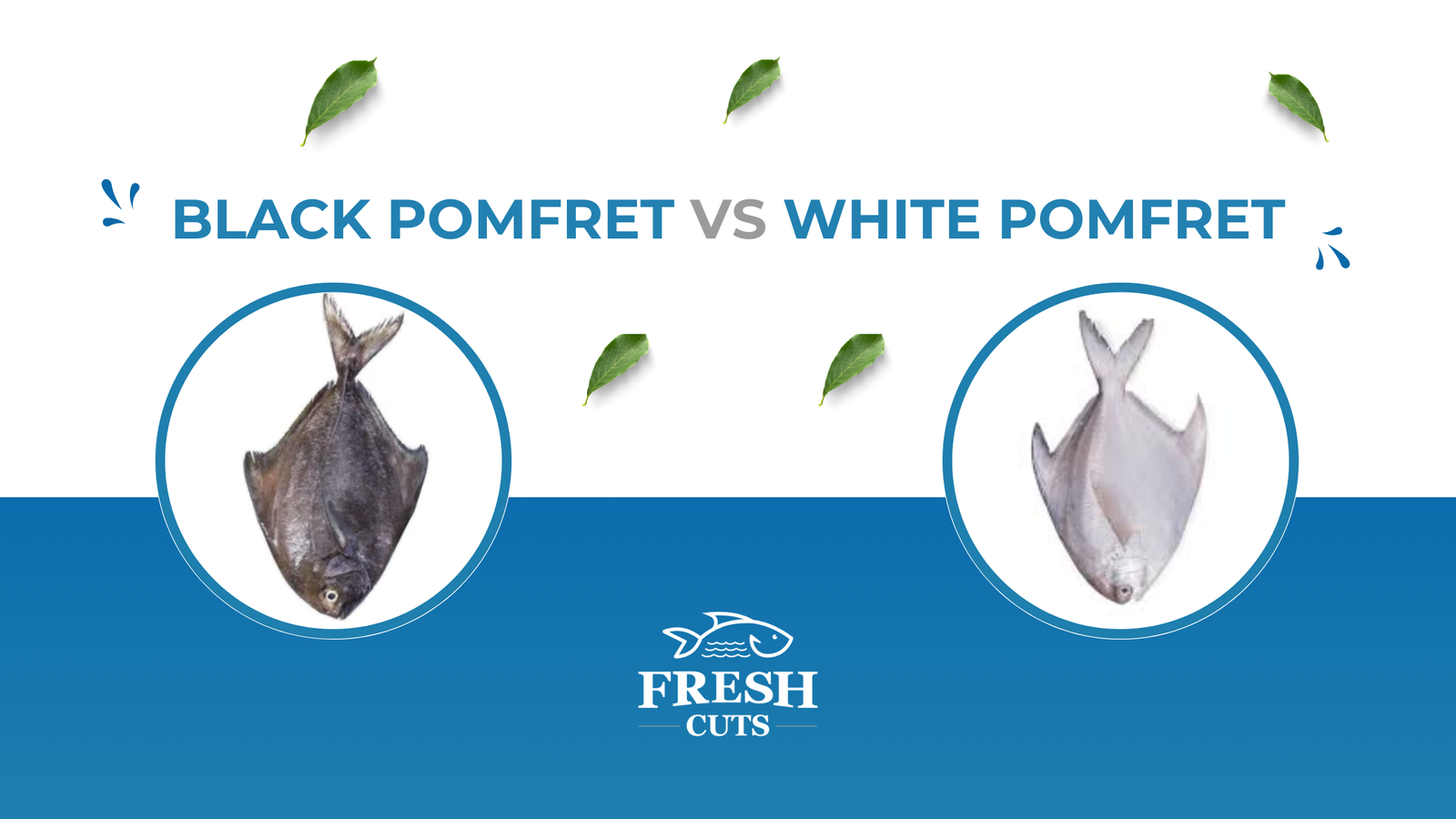
Pomfret, also known as paplet in many regions, is a popular seafood choice because of its mild taste and soft texture. Among its varieties, black pomfret, white pomfret, and silver pomfret are the most commonly eaten. Even though they look similar, their characteristics, scientific names, taste, and nutrition profiles vary. This guide explains the differences clearly, with a focus on black pomfret vs white pomfret nutrition, along with their benefits and tips to identify each type.
Types of Pomfret
White Pomfret Characteristics
- Scientific name: Pampus argenteus
- Appearance: Light silver skin with a smooth surface
- Size: Medium sized and flat
- Taste: Mild and clean flavor, perfect for simple recipes
- Habitat: Indo Pacific coastal waters
White pomfret fish benefits and white paplet fish benefit include good protein, low fat, easy digestion, and omega content.
Silver Pomfret Characteristics
- Scientific name: Pampus chinensis
- Appearance: Bright metallic silver, slimmer than white pomfret
- Size: Thin, flat, and delicate
- Taste: Smooth and mild, cooks quickly
- Habitat: Coastal Indo Pacific waters
Silver pomfret is often confused with white pomfret, which is why adding it in the types section clears confusion.
Black Pomfret Characteristics
- Scientific name: Parastromateus niger
- Appearance: Dark grey to black skin with a firmer body
- Size: Usually larger and thicker than white pomfret
- Taste: Slightly stronger flavor, perfect for frying and grilling
- Habitat: Waters of South Asia, East Asia, and the Arabian Sea
Black pomfret characteristics make it a preferred choice for recipes that need a fish that holds shape firmly. Black pomfret fish benefits include good protein, minerals, and some omega fatty acids.
Pomfret Characteristics and Identification
Body Color
- White Pomfret: Pale silver or soft grey
- Silver Pomfret: Shiny silver with a reflective finish
- Black Pomfret: Dark grey or almost black
Body Shape
- White Pomfret: Round and flat
- Silver Pomfret: Extra flat and slim
- Black Pomfret: Thicker and slightly oval
Tail Shape
- White and Silver Pomfret: Thin and forked
- Black Pomfret: Broader tail with stronger muscle
Texture
- White and Silver Pomfret: Soft flesh that breaks easily
- Black Pomfret: Firm flesh that stays together while frying
Skin Feel
- White and Silver Pomfret: Smooth and even
- Black Pomfret: Slightly rougher due to darker pigment
Nutrition Information
White Pomfret Nutrition (per 100 grams, approximate)
- Protein: 17 to 20 grams
- Calories: 90 to 175 depending on species
- Fat: 2 to 11 grams
- Omega fatty acids: Moderate to high in silver pomfret
- Vitamins: B vitamins, vitamin D
- Minerals: Selenium, potassium, phosphorus
White pomfret is milder and lighter, while silver pomfret can have more fat.
Black Pomfret Nutrition (per 100 grams, approximate)
- Protein: 18 to 21 grams
- Calories: 99 to 130
- Fat: 2.6 to 5 grams
- Omega fatty acids: Slightly higher than white pomfret
- Vitamins: B vitamins, vitamin D
- Minerals: Phosphorus, iron, selenium
Black pomfret has good protein and some natural fat. Black fried pomfret calories rise depending on the cooking oil used.
Black Pomfret vs White Pomfret Nutrition
Protein
Both offer good protein. Black pomfret may be slightly higher.
Calories
White pomfret is usually lower in calories. Black pomfret contains more natural fat, which increases calorie count.
Healthy Fat
Silver pomfret has more fat but much of it is healthy unsaturated fat. Black pomfret has moderate fat with good omega fatty acids.
Taste and Cooking
- White pomfret: best for steaming, baking, and gentle flavors
- Silver pomfret: excellent for soft and delicate dishes
- Black pomfret: great for frying, grilling, curry, and stronger seasoning
If you want lean fish, white pomfret suits you. If you want stronger taste and firmer texture, black pomfret is better.
Difference Between Silver and White Pomfret
- Silver pomfret is thinner, shinier, and more delicate
- White pomfret is slightly broader with a softer sheen
- Silver pomfret cooks faster and can have higher natural fat
- White pomfret is preferred for classic mild dishes
Benefits of Eating Pomfret
- Good quality protein
- Omega fatty acids for heart health
- Easy to digest
- Low carbs
- Useful vitamins
- Good minerals for energy and bones
- Works well in many cooking styles
Both white and black pomfret provide good nutrition for daily meals.
Conclusion
When comparing white pomfret vs black pomfret, the main differences are in texture, flavor, and nutrition. White pomfret has a mild taste, soft flesh, and lower calories, making it ideal for steaming, baking, or light dishes. Black pomfret has firmer flesh, a stronger flavor, and slightly higher fat and omega fatty acids, making it perfect for frying, grilling, or flavorful curries. Both varieties provide good protein and essential nutrients. Choosing between them depends on your cooking style and taste preference, but both are healthy options for daily meals.